Most people pick a pressure washer by PSI alone, and get the wrong machine.
You search "industrial pressure washer," see numbers like 3,000, 4,000, even 8,000 PSI, and have no frame of reference for what those figures actually do to a surface. Buy too low and you're scrubbing by hand anyway. Buy too high and you strip paint, gouge wood, or blast mortar out of brick.
This article explains the full PSI spectrum, from homeowner models to true industrial machines, what each range is designed for, and where a mid-range electric washer fits most people reading this. We'll cover gas vs. electric, why GPM matters as much as PSI, and how to read a spec sheet without getting misled.
---
## What "industrial" PSI actually means
The word "industrial" gets applied loosely in marketing. Here's the honest breakdown by category:
- **Consumer / homeowner:** 1,500–2,500 PSI - **Prosumer / semi-pro:** 2,500–3,500 PSI - **Light commercial:** 3,000–4,000 PSI - **True industrial:** 4,000–8,000+ PSI
True industrial machines, the kind used in oil refineries, ship maintenance, and industrial degreasing, regularly operate above 5,000 PSI. Some hydro-blasting rigs used for concrete preparation run at 10,000 to 40,000 PSI. Those are not pressure washers in any consumer sense. They require specialized training, protective gear, and often two-person operation.
For most cleaning work on a residential property, siding, decks, driveways, fences, vehicles, you need nowhere near that output.
---
## Why PSI is only half the equation
Here's what most guides miss:
PSI measures pressure. **GPM** (gallons per minute) measures flow. Together they produce **Cleaning Units** (PSI x GPM = CU), which is the real measure of how quickly a machine clears a surface.
A 4,000 PSI machine at 1.0 GPM has 4,000 CU. A 3,000 PSI machine at 2.5 GPM has 7,500 CU.
The second machine cleans faster, even though it shows a lower PSI on the box. This is why comparing pressure washers by PSI alone leads to bad purchases.
When you see an industrial pressure washer spec sheet, look at both numbers. A 4,000 PSI / 4.0 GPM commercial unit has 16,000 CU. That's genuinely different from a 2,000 PSI / 1.2 GPM consumer model at 2,400 CU, not because the pressure is double, but because the combined output is dramatically higher.
---
## PSI ranges matched to real jobs
### 1,500–2,000 PSI: Everyday home use
This range handles cars, patio furniture, siding on single-story homes, and light deck cleaning. It won't hurt most surfaces if you use the correct nozzle.
The Sun Joe SPX3000 sits at 2,030 PSI and represents this tier well. It runs on 14.5 amps, weighs about 31 pounds, and connects to a standard garden hose. For homeowners without a large driveway or multi-story siding, it covers the majority of cleaning tasks at a price ($150–180) that's hard to argue with.
The limitation: it won't strip heavy oil stains from concrete or clean a 3,000 sq ft commercial parking lot in any reasonable time. That's not what it's built for.
### 2,000–3,500 PSI: Prosumer territory
This is where most "homeowner plus" needs land. Driveways with embedded grime, second-story siding, wood decks with algae, and composite fencing all respond well here.
The Simpson MegaShot 3200 PSI ($350–400) is a gas-powered unit that bridges the gap between residential and light commercial use. It delivers 2.4 GPM, putting it at 7,680 CU, strong enough for regular driveway work and exterior cleaning on larger homes. The tradeoff: gas engines require oil changes, carburetor maintenance, and proper winterization. You also can't run it in an enclosed space.
For a full comparison of electric versus gas options, see our breakdown at [Electric vs. Gas Pressure Washer](/article/electric-vs-gas-pressure-washer).
### 3,500–5,000 PSI: Light commercial
Fleet washing, restaurant grease traps, commercial parking structures, and equipment yards fall here. Machines in this range are typically gas or diesel, often trailer-mounted, and cost $800 to several thousand dollars. They're not sold at big-box stores. They're purchased through commercial equipment dealers and require proper training to use without causing surface or personal injury.
### 5,000 PSI and above: True industrial
At this level you're in hydroblasting territory. These machines remove rust, heavy coatings, and concrete laitance. They're used in shipyards, pipeline maintenance, and construction surface prep. Operation typically requires certification. The water stream at this pressure can penetrate skin, it's a medical emergency if it does.
If you're asking "how many PSI in an industrial pressure washer" because you want to clean your driveway, you need to know that a true industrial machine would destroy your concrete, not clean it.
---
## What most homeowners actually need
Here's the interesting part:
The majority of residential cleaning jobs, including work that feels "heavy duty" to most people, fall comfortably within 1,500 to 2,500 PSI. The right nozzle angle matters more than raw PSI in most of those cases.
For help calibrating to your specific property, see [Pressure Washer PSI Guide](/article/pressure-washer-psi-guide) and [What Size Pressure Washer for a 2 Story House](/article/what-size-pressure-washer-for-2-story-house).
If your primary use case is a home driveway or deck, our [Best Pressure Washer for Driveway](/article/best-pressure-washer-for-driveway) guide narrows down the options based on surface type and stain level.
---
## Nozzle selection changes everything
PSI is constant from the pump. What changes at the surface is how that pressure is concentrated or spread.
- **0-degree (red):** Pencil-thin stream. Maximum impact on a tiny point. Used for removing rust from metal. Never use on wood, siding, or vehicles. - **15-degree (yellow):** Strong stripping action. Good for concrete and brick with heavy staining. - **25-degree (green):** General cleaning. Most tasks start here. - **40-degree (white):** Wide, gentle fan. Safe for cars, painted wood, and sensitive surfaces. - **65-degree (black) / soap nozzle:** Low pressure for applying detergent.
A 2,000 PSI machine with a 15-degree nozzle can outperform a 3,000 PSI machine on a 40-degree nozzle for stubborn stains. Match the nozzle to the surface first, then decide if you need more raw pressure.
---
## Frequently asked questions
**Q: How many PSI does an industrial pressure washer have?**
Light commercial machines typically run between 3,000 and 5,000 PSI. True industrial units used in manufacturing and infrastructure work operate from 5,000 PSI up to 40,000 PSI for specialized hydro-blasting applications. For context, most residential driveways clean effectively at 2,500 to 3,200 PSI.
**Q: Is 2,000 PSI enough for a driveway?**
For light to moderate staining, yes. The Sun Joe SPX3000 at 2,030 PSI handles residential concrete reliably when paired with a surface cleaner attachment and the correct nozzle. For oil stains or heavy discoloration, you'll want to step up to 2,500–3,200 PSI or pre-treat with a degreaser before washing.
**Q: What's the difference between PSI and bar in pressure washer specs?**
1 bar equals approximately 14.5 PSI. European pressure washer specs often list bar instead of PSI. A machine listed at 150 bar is running at roughly 2,175 PSI. When comparing imported models, convert first.
**Q: Can I use an industrial pressure washer at home?**
Technically yes, but it's not practical or safe without training. Machines above 3,500 PSI can destroy wood decking, etch concrete, strip paint, and cause serious injury if the wand is misdirected. Most homeowners need a machine in the 1,500 to 3,000 PSI range.
**Q: Does a higher PSI pressure washer use more water?**
Not automatically. Water use is driven by GPM, not PSI. A high-pressure machine with low GPM uses less water than a moderate-pressure machine with high GPM. Check both specs if water conservation matters to you.
Recommended Products
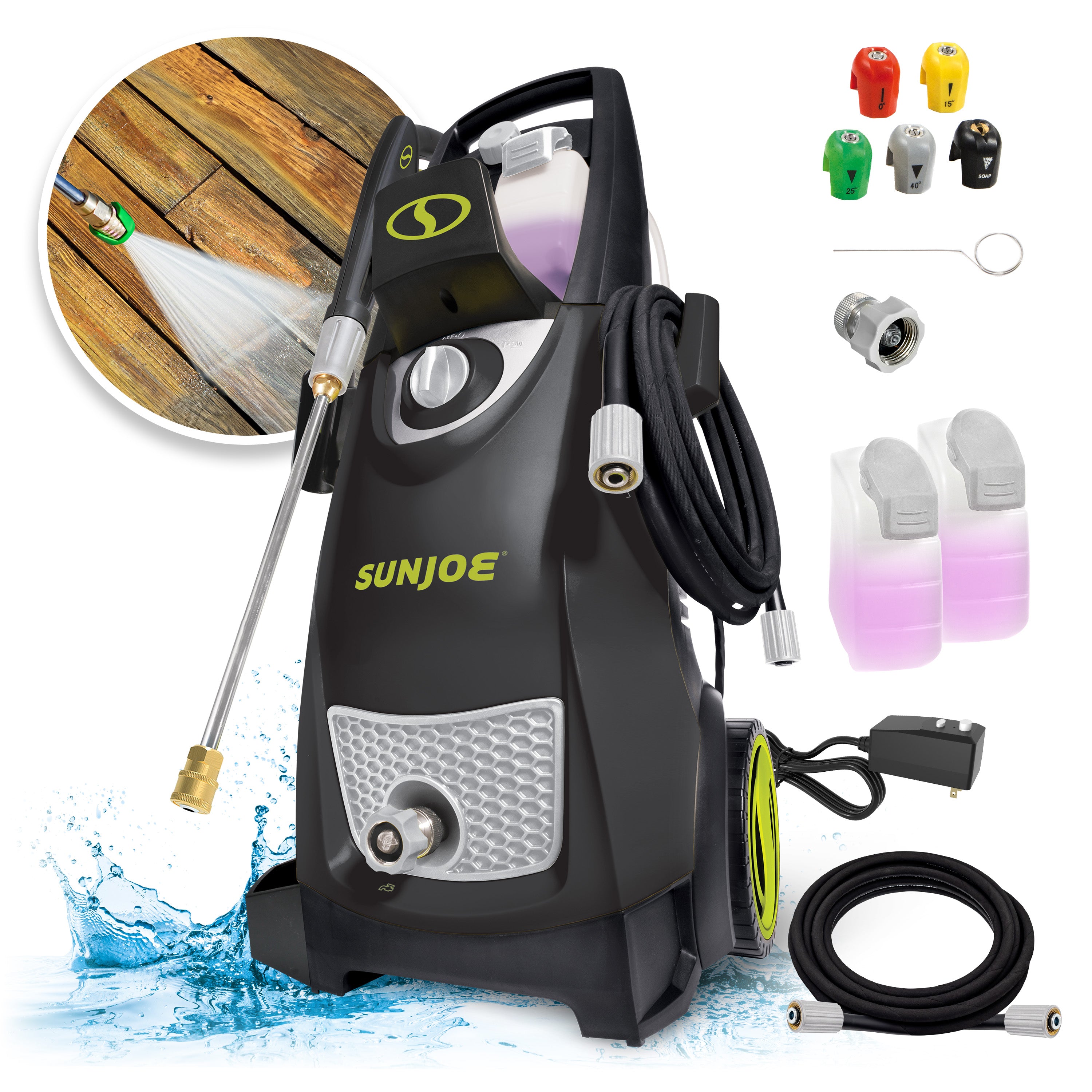
Sun Joe SPX3000
Powerful electric pressure washer with 2030 PSI, perfect for homeowners.
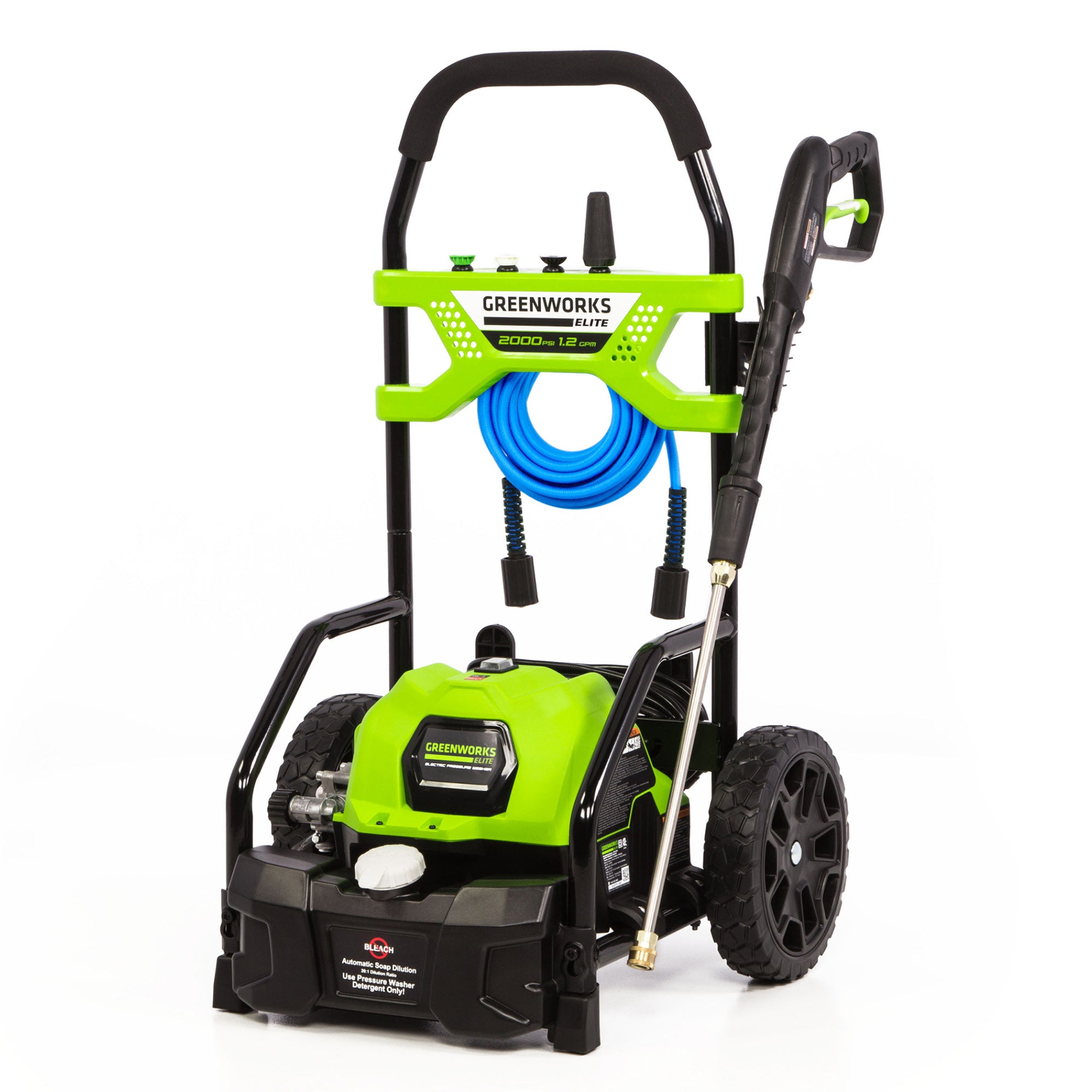
Greenworks 2000 PSI
Reliable electric washer with consistent pressure and cordless convenience.
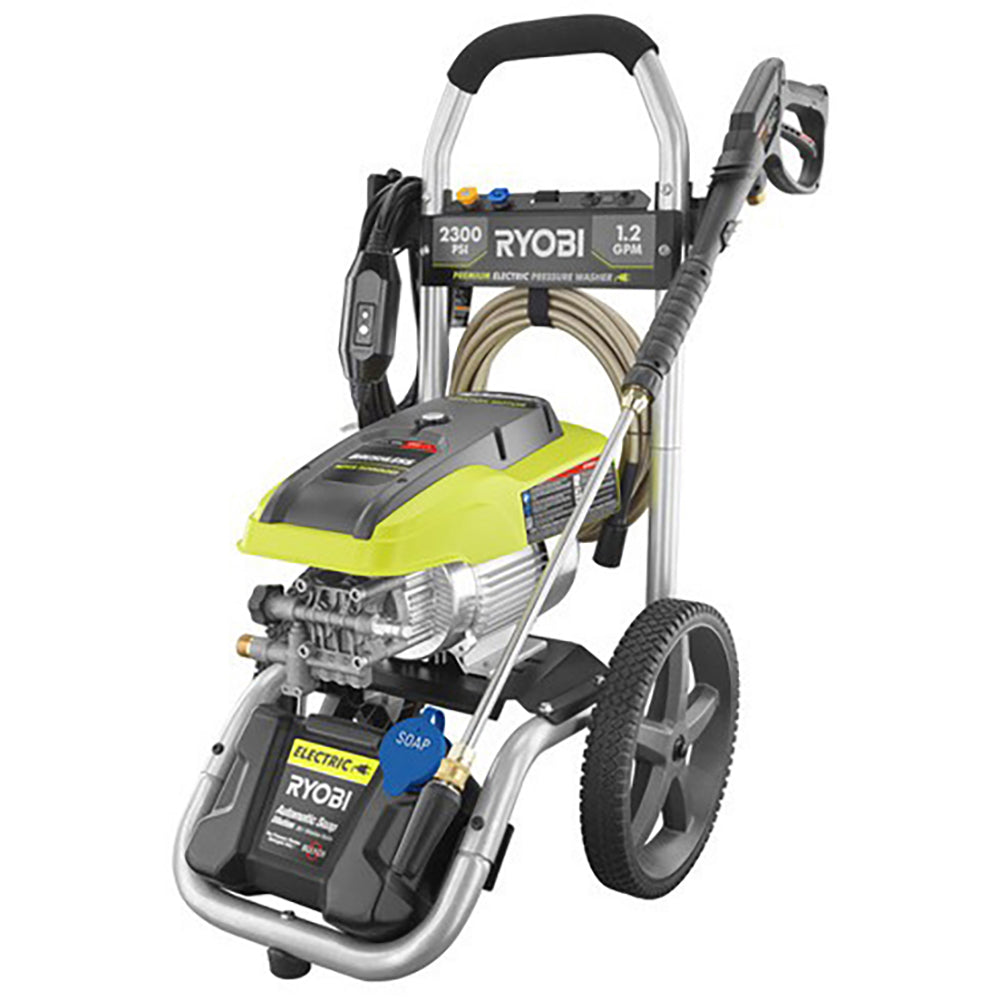
Ryobi 2300 PSI
Premium electric model compatible with Ryobi battery systems.